
Lakeland’s Drainage and Waterproofing Specialists
Lakeland gets its name honestly — the city is defined by its 38 named lakes, a remarkable concentration of freshwater that shapes everything from the local character to the real estate market to the drainage challenges that homeowners face throughout Polk County’s largest city. Those 38 lakes create a water table that remains elevated across most of the city year-round, not just during the rainy season. The collective influence of so much standing water on local groundwater means that soil saturation levels in Lakeland are chronically higher than in comparable inland Florida cities without significant lake coverage.
Add Polk County’s clay-dominant soils to this baseline and you get one of the more demanding drainage environments in Florida’s interior. Clay absorbs rainfall slowly — far more slowly than the sandy soils typical of coastal Florida. When a storm delivers two or three inches in a short period, the clay layer rapidly saturates and then sheds water as surface runoff. On properties where the water table is already elevated from lake proximity, this creates flooding that is both rapid in onset and slow to resolve. It is not unusual for Lakeland homeowners to see standing water in their yards for days after a significant storm.
Andriy works throughout Lakeland’s neighborhoods, from the historic Dixieland area and Lake Hollingsworth surroundings to the newer construction of South Lakeland and Lakeland Highlands. The approach in each area starts with understanding the property’s specific relationship with the local water table and soil profile before designing a system that can actually function reliably in those conditions.
Common Drainage Problems in Lakeland
- Citywide elevated water table from 38 named lakes
- Clay soils absorbing rainfall slowly, generating rapid surface runoff
- Standing water persisting in yards for days after significant storms
- Foundation saturation from prolonged high-water-table conditions
- Standard French drain systems underperforming in clay soil conditions
- Frequent flooding in low-elevation neighborhoods near lake boundaries
French Drains and Drainage Solutions in Lakeland
Lakeland is where a standard French drain most often disappoints. In sandy coastal soil, groundwater moves easily into a gravel trench; in Polk County clay it moves slowly, and a trench without enough fall or a real outlet fills and sits. That does not make French drains wrong here, it makes the design matter more. On clay lots a French drain often needs surface catch basins alongside it to take the runoff the clay sheds, and an outlet sized for a water table that is already high from the lakes. Learn how a French drain installation is planned, or how custom drainage solutions combine several parts into one system. For every other drainage service we offer across Tampa Bay, start at the homepage.
Services Available in Lakeland
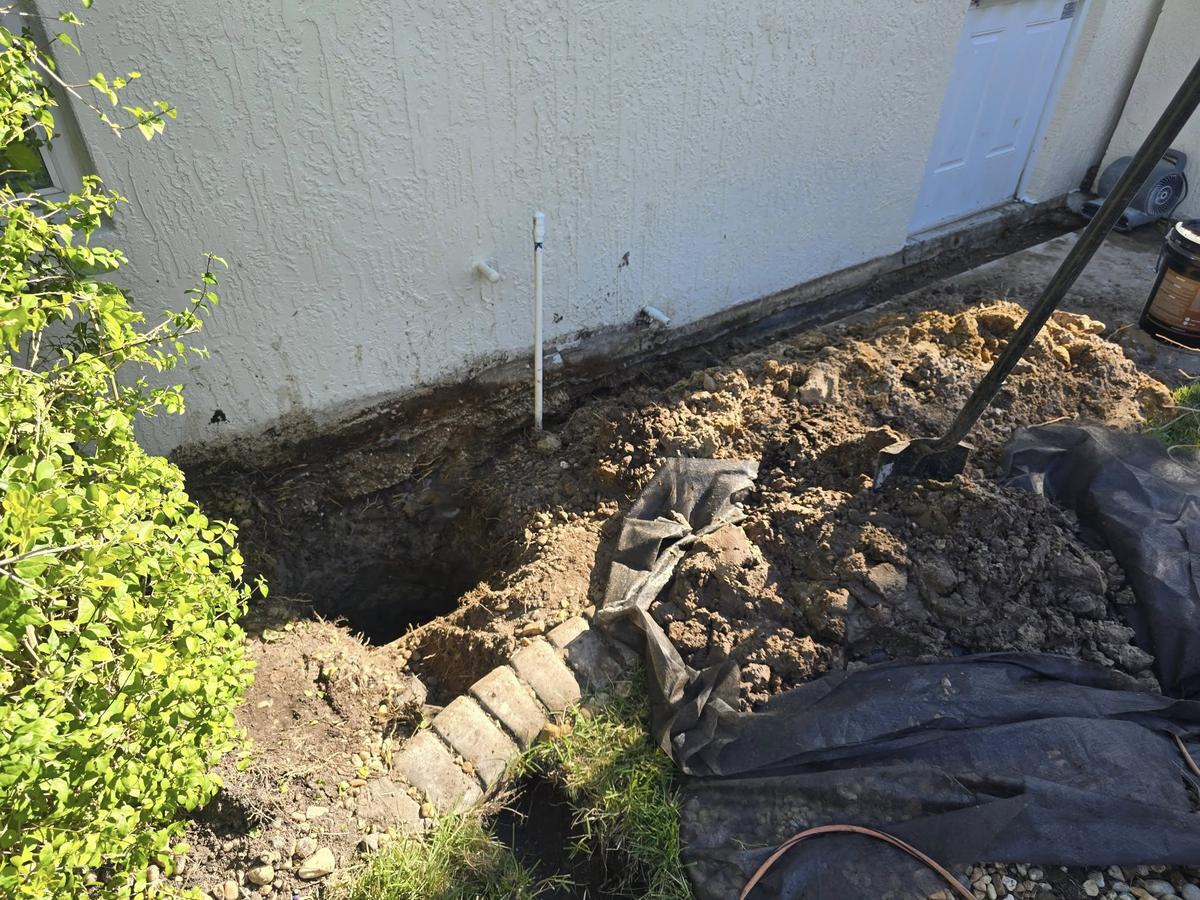
Channel Drain Installation
Surface interception drains for Lakeland properties where clay soils and high water tables combine to create rapid surface flooding after storms.
Channel Drain Installation →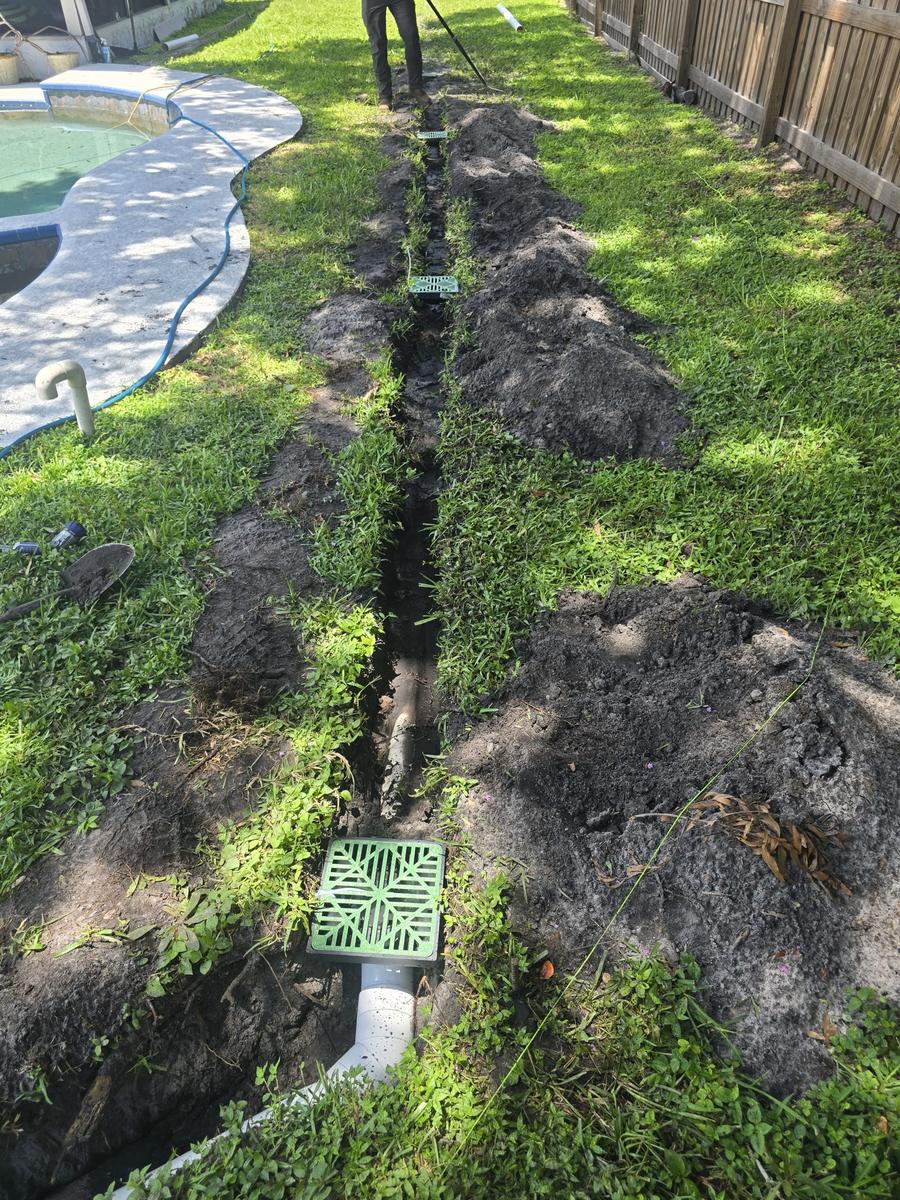
Foundation Waterproofing
Membrane protection for Lakeland foundations facing year-round hydrostatic pressure from the city’s lake-elevated water table.
Foundation Waterproofing →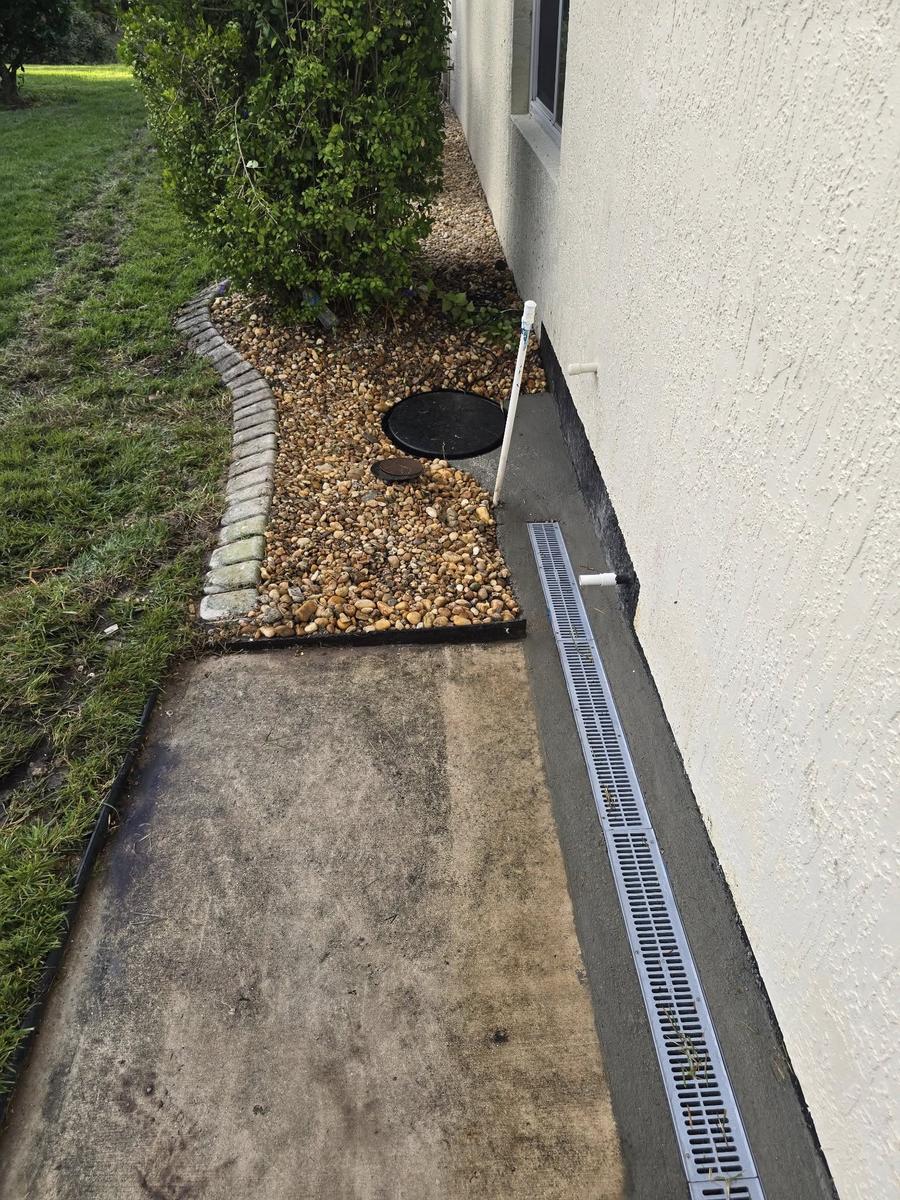
Downspout Drainage
Underground routing of roof runoff away from Lakeland foundations, removing additional moisture load from soil already at saturation capacity.
Downspout Drainage →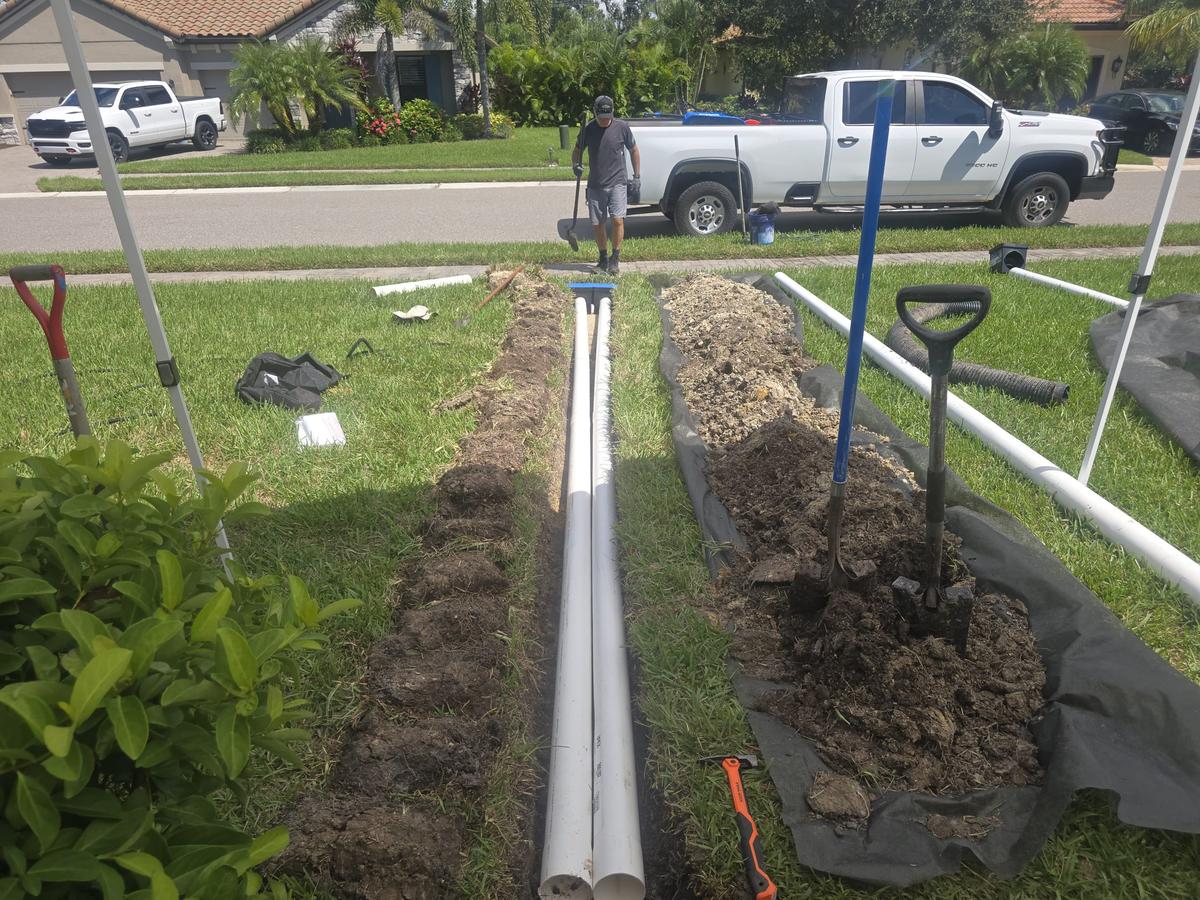
Sump Pump Systems
Active sump systems that mechanically manage Lakeland’s high water table conditions — the solution when soil percolation simply cannot keep pace with groundwater.
Sump Pump Installation →