
What a French Drain Does
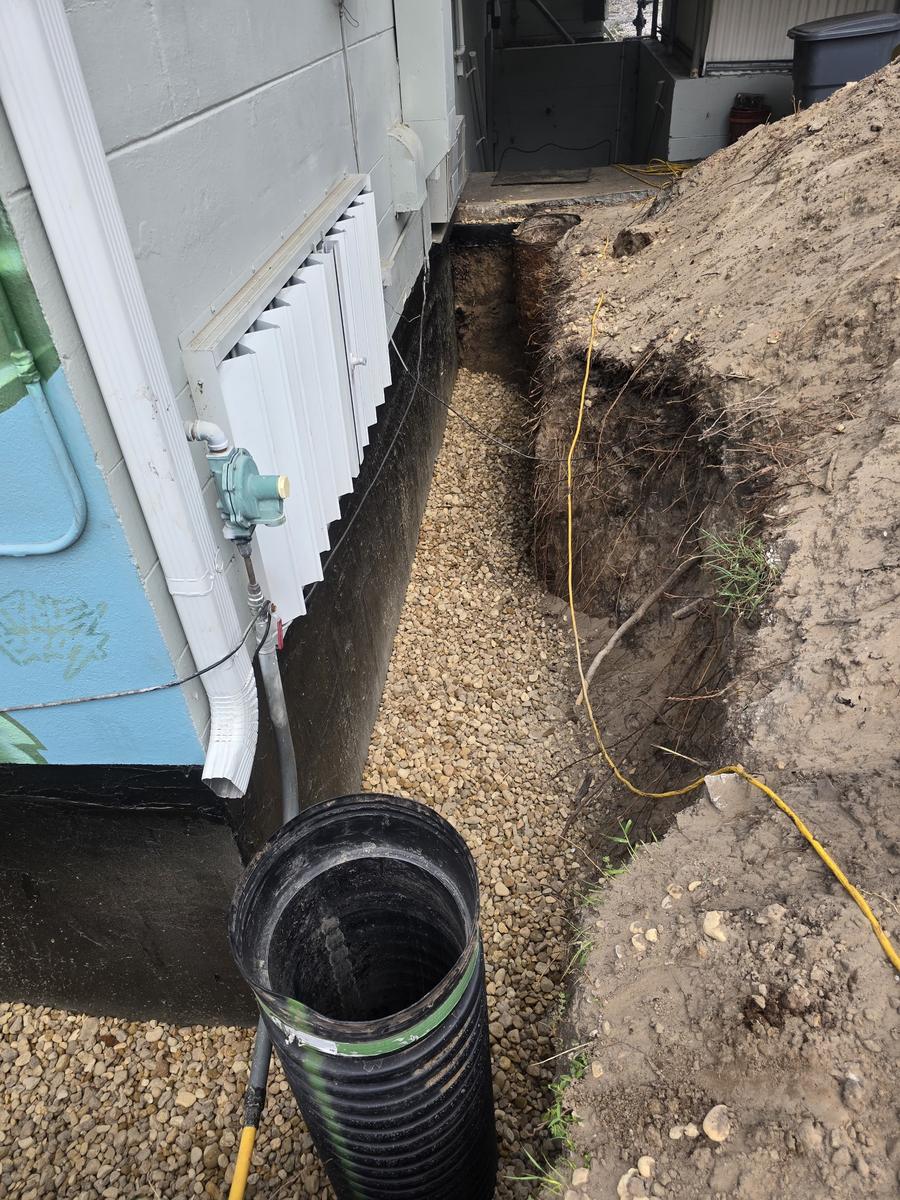
A French drain is a trench filled with gravel with a perforated pipe running along the bottom, and French drain installation is mostly about getting that trench, its slope and its outlet right. Water in the surrounding soil moves toward the gravel because it is the easiest path, drops into the pipe, and the pipe carries it downhill to an outlet. Nothing shows above ground when it is finished. The lawn goes back on top and the drain keeps working every time it rains.
That makes it the right fix for a specific kind of problem: water that is in the ground. If your yard squishes underfoot a day after the storm, if one corner of the lot never dries out, or if water is seeping toward the foundation from a neighbor’s higher lot, a French drain intercepts it before it reaches the house. It is a different job from catching water running off a roof or across a driveway, which is what downspout drainage and channel drains are for.
Why Tampa Bay Yards Need Them
Florida makes French drains both more useful and harder to get right. The land around Tampa Bay is flat, so water has little natural reason to leave a yard. The water table is high, which means the soil is already close to full before a summer storm starts. And when an afternoon thunderstorm drops inches of rain in an hour, the ground saturates fast and stays that way.
The flat ground is also where most failed French drains come from. A perforated pipe that does not fall continuously toward its outlet just becomes an underground puddle. On a lot with only a few inches of grade from front to back, the slope has to be planned before anyone picks up a shovel. Where does the water go? Is there enough fall to get it there? Does the outlet stay clear of the neighbor’s property? Andriy answers those questions on site, during the free visit, before he writes anything up.
Soil matters too. Sandy soil drains well but carries fines that can work their way into an unprotected trench. Lakeland and parts of Polk County have more clay, which holds water and needs a different approach, sometimes a French drain combined with catch basins or a sump pump where gravity alone cannot move the water out.
Signs You Need a French Drain
- Lawn that stays soggy for a day or more after rain, even when it is not visibly flooded
- A wet side yard between two houses where sun never dries it out
- Water seeping toward the foundation from a higher lot next door
- Dead or yellow grass in the same low spot year after year
- Moisture in a crawlspace or under the house after storms
- Mosquitoes breeding in water that lingers along the fence line
How Andriy Installs a French Drain
Free Site Visit
Andriy walks the property, finds where the water sits and where it comes from, and checks how much fall there is to an outlet. About an hour on site.
Written Proposal
You get the route, depth, outlet and price in writing by email after the visit. Nothing starts until you have read it.
Dig and Lay
Andriy and his small crew dig the trench and lay the pipe themselves. Narrow trench, sod lifted and set back, slope checked along the run.
Water Test
Before the job is finished, the system is run with water to confirm it flows to the outlet. Then a walkthrough with you.
Where the Water Goes
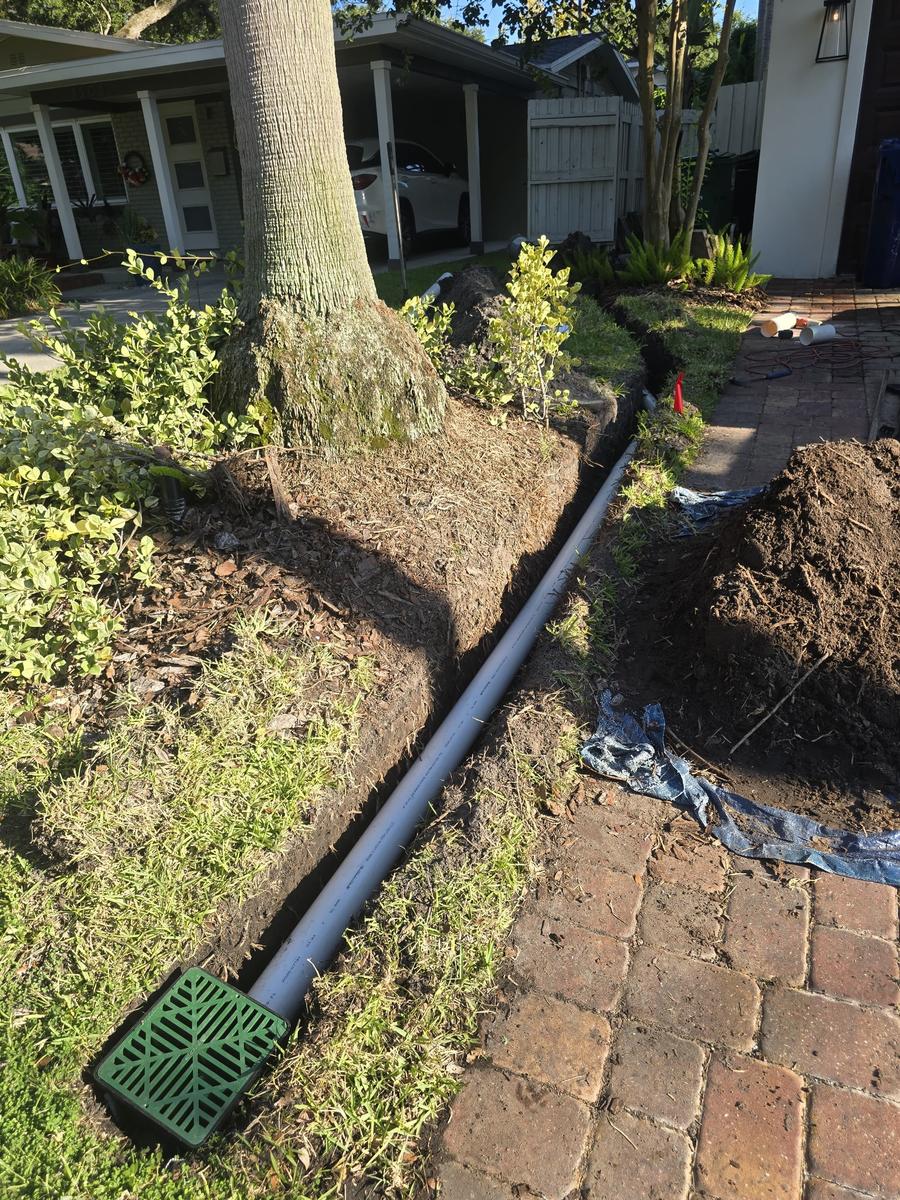
A French drain is only as good as its outlet. Depending on the property, that can be a pop-up emitter in a lower part of the yard, a dry well, a connection to an existing drainage system, or the street where local rules allow it. On many Tampa Bay jobs the French drain is one part of a larger system that also takes the downspouts and a catch basin or two. When that is the case, Andriy designs it as one network with one outlet plan rather than three separate fixes. See custom drainage solutions for how those combined systems come together, or yard drainage if your problem is standing water on top of the lawn.
Serving All of Tampa Bay
Andriy installs French drains across Pinellas, Hillsborough, Pasco, Manatee, Sarasota and Polk counties, including St. Petersburg, Tampa, Clearwater, Brandon, Riverview, Bradenton, Sarasota and Lakeland. Visits run seven days a week. See every town on the service areas page.