
The Problem With Downspouts Dumping at Your Foundation
Your gutters do their job — collecting the water that hits your roof and routing it to downspouts. But what happens after the water exits the downspout is where most Florida homes have a serious problem. The standard downspout terminates 6 inches above grade, right at the foundation line, and dumps hundreds of gallons of water directly against your home during every rain event.
Florida averages over 54 inches of rainfall annually. During the summer rainy season, your roof can shed thousands of gallons per storm. That water saturates the soil adjacent to your foundation, creates hydrostatic pressure against foundation walls, invites mold and moisture into crawl spaces, erodes soil under slab edges, and accelerates the kind of foundation movement that costs tens of thousands of dollars to repair.
Andriy has seen this pattern on properties across Tampa, St. Petersburg, Clearwater, and Pinellas County — homeowners with otherwise well-maintained properties dealing with persistent moisture problems that trace directly back to unmanaged downspout discharge.
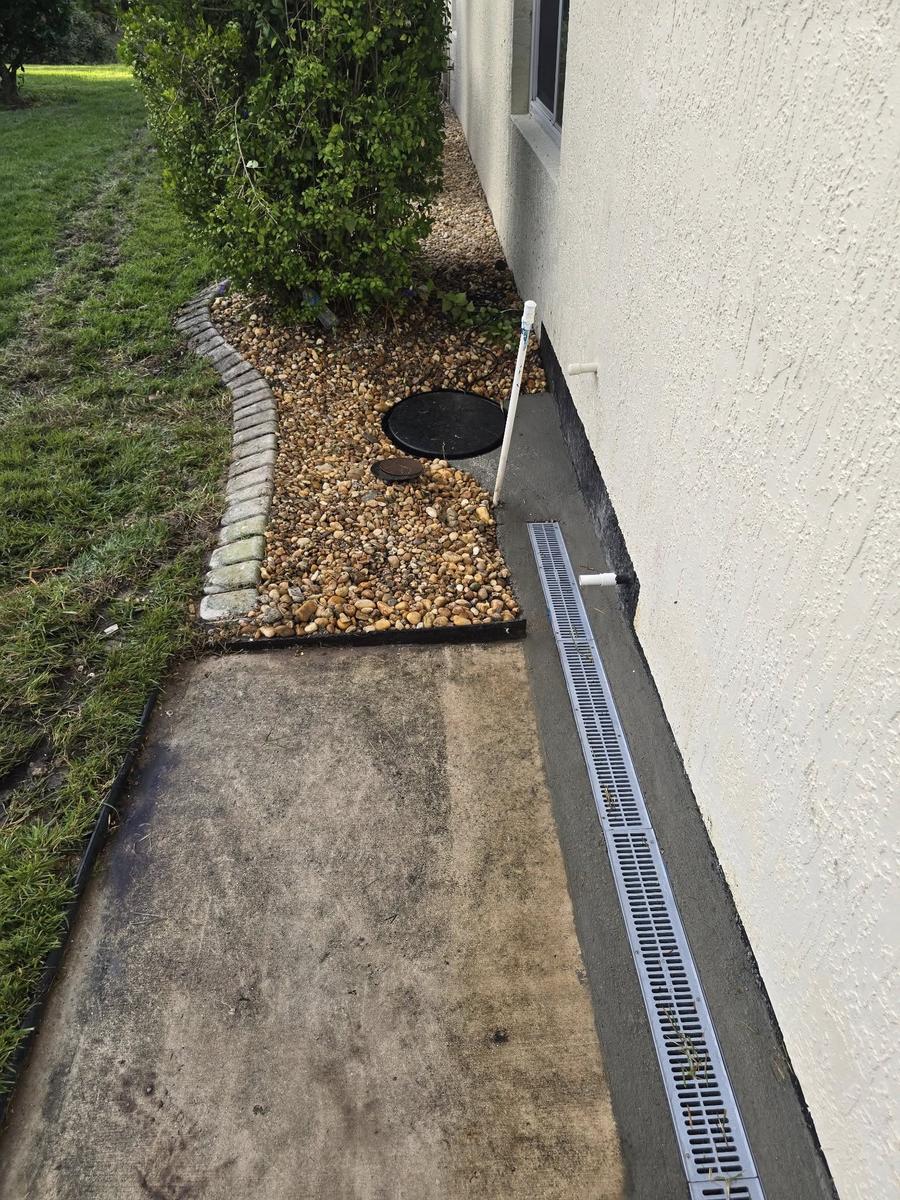
How Downspout Drainage Works
A proper downspout drainage system intercepts roof runoff at the downspout outlet and routes it underground via Schedule 40 PVC pipe to a safe discharge point — typically the street, a dry well, or a low point in the yard far enough from the foundation to prevent saturation.
Depending on your property, the system may include a catch basin beneath each downspout (with a removable grate for cleanout access), underground PVC connecting multiple downspouts to a common pipe, proper slope to ensure self-flushing flow, and a pop-up emitter or outfall point at the discharge end.
Andriy designs the system based on your roof’s square footage, the number of downspouts, your yard’s natural grade, and the available discharge options. Properties in Tampa Bay’s flat zones sometimes require creative routing — Andriy finds a solution regardless of grade limitations.
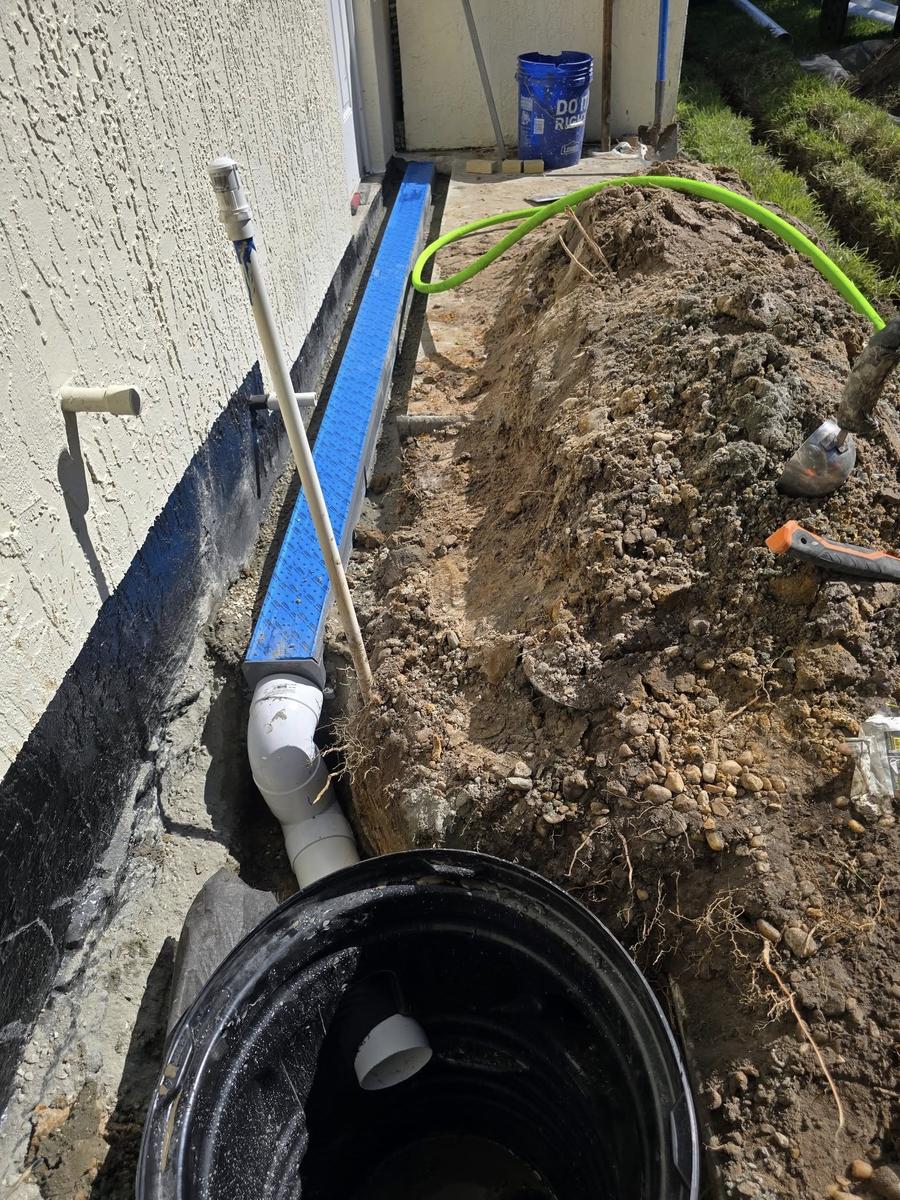
Downspout Drainage System Components
- Catch basins — Collect water from the downspout, allow debris to settle, provide cleanout access
- Schedule 40 PVC pipe — Smooth interior for maximum flow rate, long-lasting in Florida soil conditions
- Pipe fittings and cleanouts — Proper elbows and cleanout access points for maintenance
- Discharge emitters — Pop-up emitters that open under flow pressure and close to prevent animal entry
- Gravel beds — Around discharge points to prevent soil erosion at the outfall
Why Choose Home Waterproofing and Drainage Solutions
- Andriy on every job — he designs and installs personally
- Systems sized for Florida rain volumes, not average national conditions
- Proper pipe slope and pipe sizing for self-flushing operation
- Integrates with existing channel drains, sump pumps, and waterproofing systems
- Clean installations — sod properly replaced, landscape restored
- Free estimates, no obligation