
When Your Yard Floods After Every Rain
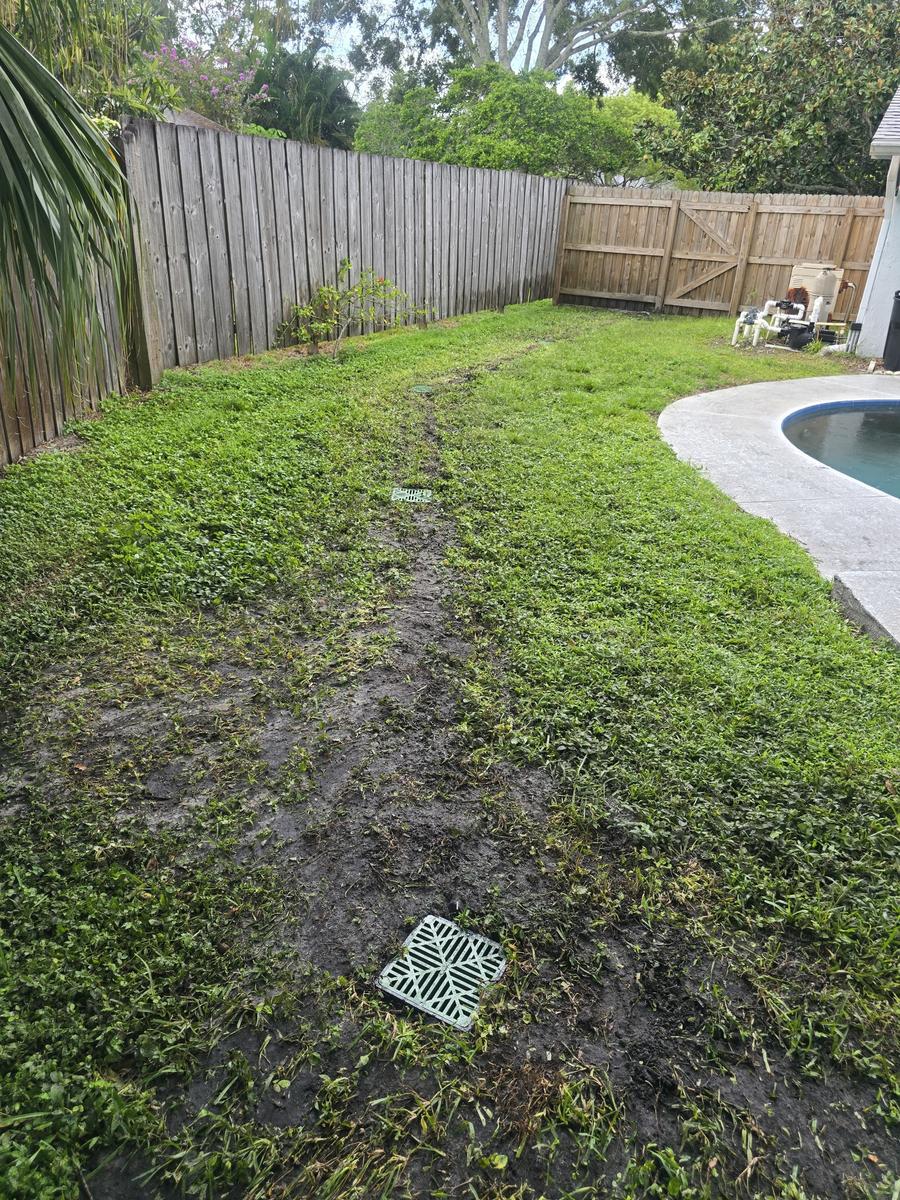
Standing water on the lawn is the usual reason people call about yard drainage. The pattern is familiar: a summer storm rolls through, the backyard fills, and it is still there the next morning. The grass in that spot dies off. Mosquitoes move in. Kids and dogs track mud into the house. If the low spot is near the house, the water sits against the foundation or runs underneath into the crawlspace.
On most Tampa Bay properties the cause is a combination of things, not one. The lot is flat, so water has no natural slope to follow. Roof runoff lands in the same corner every time. A neighbor’s lot sits a few inches higher. And after months of rainy-season saturation, the soil simply stops absorbing. Fixing yard drainage means dealing with each of those, which is why Andriy starts every job by walking the property and watching where the water actually goes.
What Yard Drainage Involves
Most yard drainage systems combine a few proven parts, chosen for what the property needs:
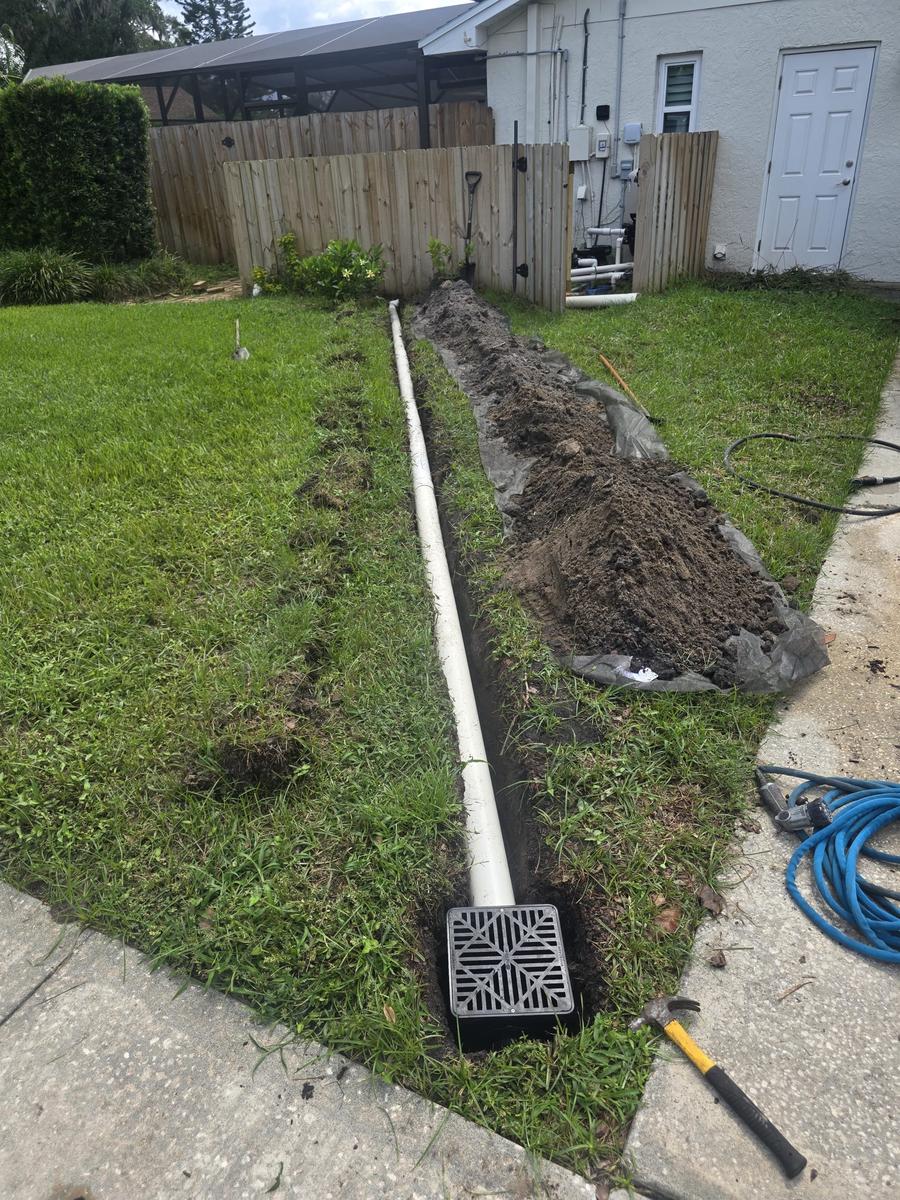
- Catch basins: grated boxes set flush with the lawn at the low spots, which collect standing water and send it underground
- Underground pipe: solid pipe laid at a steady fall from the basins to the outlet, out of sight under the sod
- French drains: gravel trench and perforated pipe where the problem is water in the soil rather than on top of it (more on French drains)
- Downspout tie-ins: roof water piped into the same system so it never reaches the lawn (downspout drainage)
- Dual pipe runs: two parallel lines for yards that take more water than one pipe can carry in a Florida downpour
- The outlet: a lower part of the property, the street where allowed, or an existing drainage system, planned so the water does not end up on a neighbor
Why Flat Florida Lots Are Hard to Drain
Regrading alone rarely solves it here. On a lot with only a few inches of fall from back to front, there is not enough height to reshape the lawn into a slope that moves real volume, and summer storms deliver a lot of volume. Underground pipe gets around that: the pipe can fall steadily even where the surface cannot, carrying water under the yard to an outlet that might be the full length of the lot away.
The planning has to be right. A pipe with a dip in it holds water and silts up. A basin set a little high leaves a puddle around it. An outlet that sits lower than the street in a heavy storm backs up. These are the details Andriy checks on site and builds into the written proposal, and the reason every system is water-tested before the job is finished.
The Process
Free Site Visit
About an hour on the property: the water, the grading, the foundation, and where the water can legally go.
Written Proposal
Basin locations, pipe route, outlet and price, emailed to you after the visit.
Installation
Andriy and his small crew dig and lay the pipe themselves. Narrow trenches, sod set back, basins flush with the turf.
Flow Test
Water is run through the system before completion, then Andriy walks you through how it works.
Yards Around Pools and Patios
Pool areas get water from every direction: the screen enclosure’s gutters, the deck, the surrounding lawn. Andriy regularly ties those together, with channel drains on the deck and catch basins in the grass feeding one outlet, without touching the pool equipment. For larger combined systems, see custom drainage solutions.
Serving All of Tampa Bay
Yard drainage across Pinellas, Hillsborough, Pasco, Manatee, Sarasota and Polk counties, including St. Petersburg, Tampa, Largo, Pinellas Park, Wesley Chapel, Riverview, Plant City and Sarasota. Visits seven days a week. See every town on the service areas page.